The Mardi Himal Trek
posted on 24 November, 2025 by Dan Vonk in travel, personal
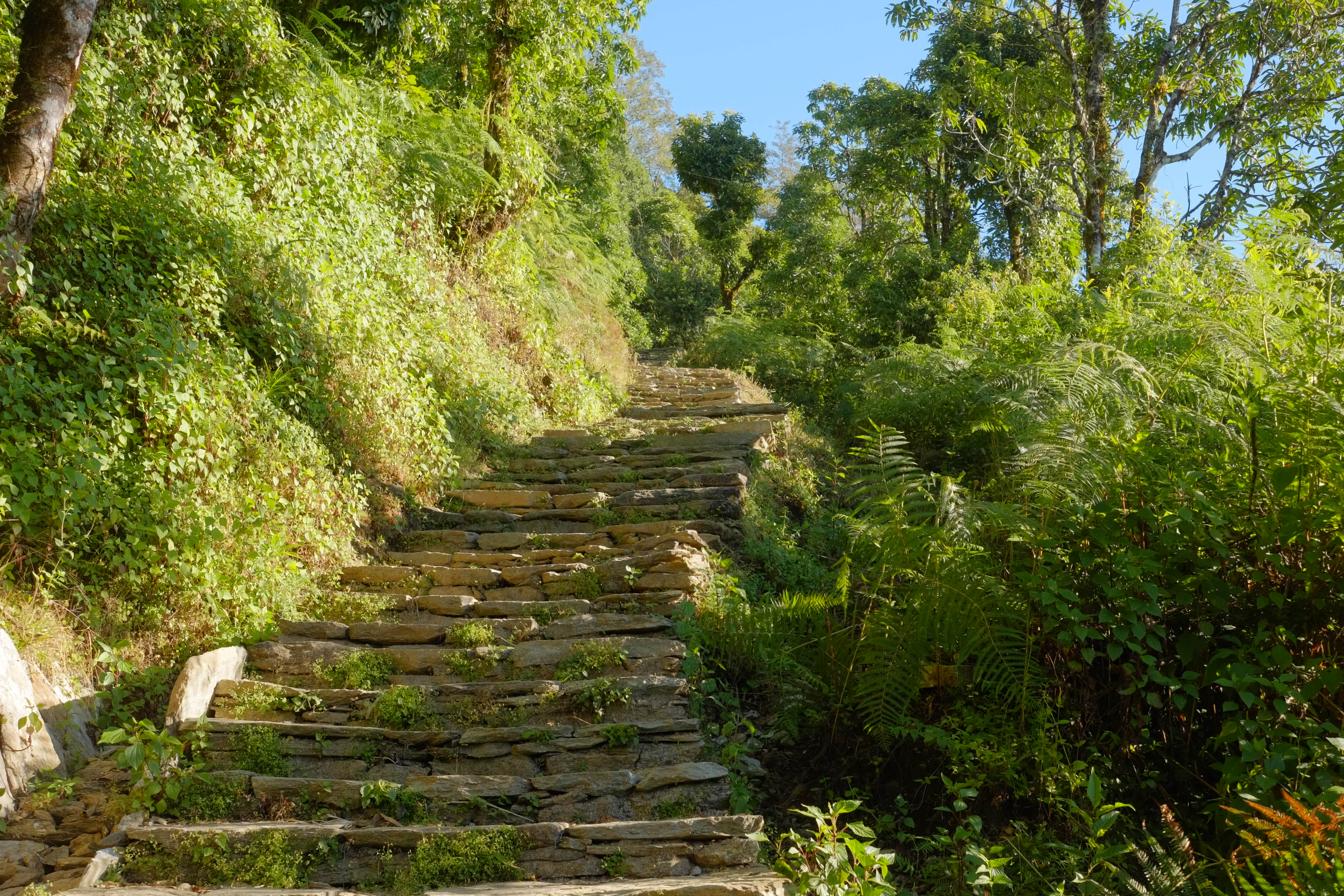
One of the items on my TODO list in Nepal was to go trekking in the Annapurna region. The most famous option is the Annapurna Base Camp (ABC) trek, which is a breathtaking trek right through the valley of Annapurna and up to the base camp at about 4500m. However, that takes about a week and I was rather looking for something cheap and cheerful. The owner of the hotel I was staying in suggested the Mardi Himal trek, which is relatively new and a lot shorter (3-4 days), so fit the bill well. Although it wasn’t quite as breathtaking as ABC, it definitely didn’t disappoint either.
The organisation around these treks is always a popular topic amongst trekkers in Nepal. In my experience, it seemed that most people went with a guide or organised excursion and indeed, it is technically “required”, but that doesn’t prevent one from personally buying a permit from the government website and just turning up! For me, that meant taking a shared taxi at the break of dawn from Pokhara to Kharde and simply walking. At the start of the trek, there is a ticket office, where a park officer checks your permit. I greeted him with a friendly namaskar, whereupon he gave me a map and waved me through. I’ve heard anecdotally that no guide is required for trekking on the ABC or the Annapurna Circuit trek either. However, it is required for Manaslu and for most treks in the Everest region.
The day starts with a few hours of stair climbing up through the green hills around Annapurna. Stairs are quite common on treks around here so perhaps starting with them early sets expectations correctly. Nevertheless, even on this relatively boring part of the trek, the views down into the valley below and the general sense of being in the “jungle” were still exciting.
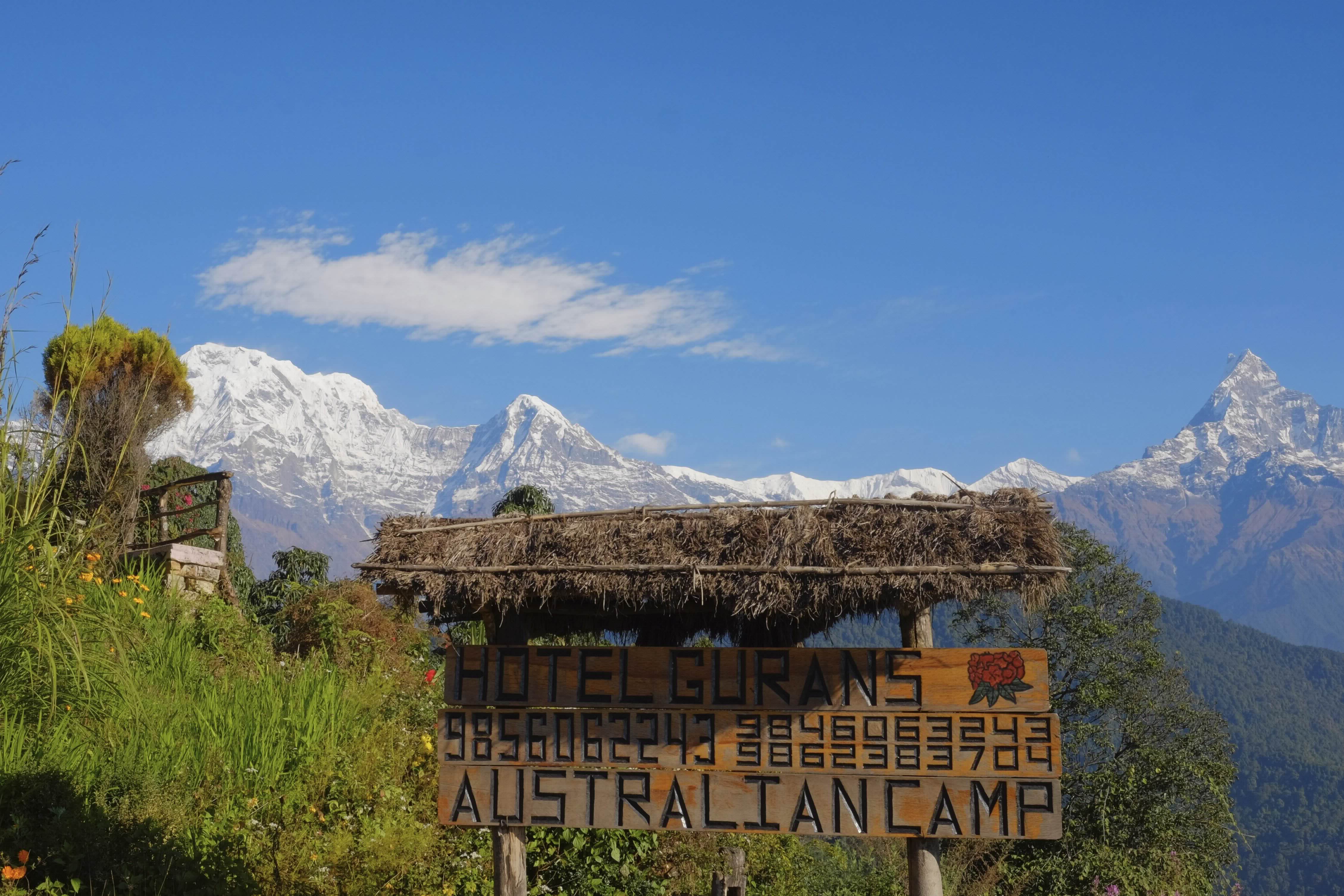
The first major stop is the Australian Camp, which has some pleasant-looking guesthouses around a well-cut lawn and with a great backdrop of the entire Annapurna range in the distance. Although stopping for a quick chai is never a bad idea, it was far too early in the day for dillydallying. Onwards!
The rest of the day was similar in character: there were still a lot of stairs but it was slogging through dense forest rather than walking along the ridges of the hills as previously. It was quite rare to get any mountain views at this point but I did get to see some interesting animals like a goral and the twisted, mossy trees and fern-covered environment were strangely reminiscent of the bush around Sydney, which I found very nostalgic.
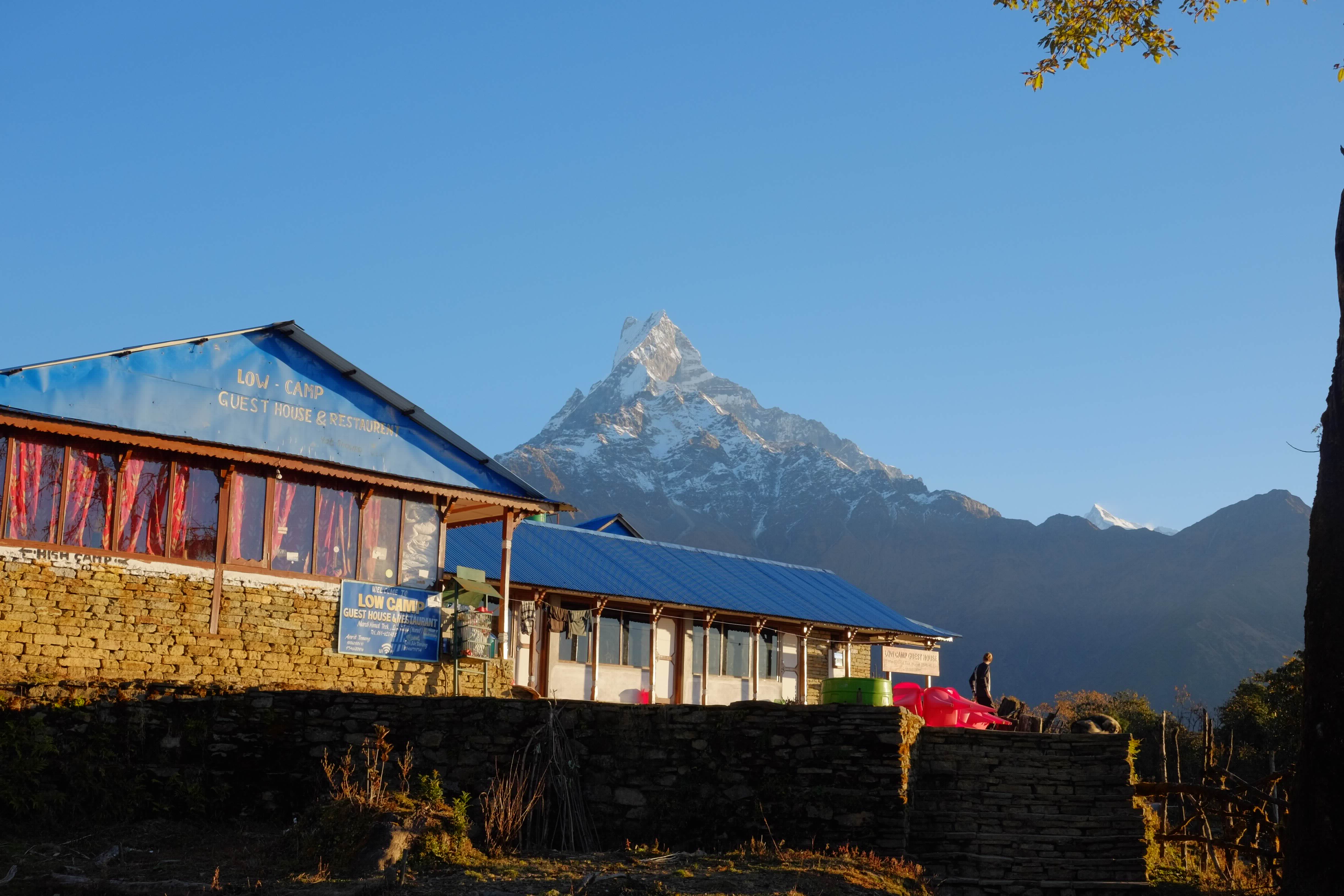
At around 16:30, I made it to Low Camp, which I thought was pretty good going. From here, the views start getting special again and in particular, watching the sun set over Machapuchare for the first time was a truly special sight. Although I was warned that it would get cold in the mountains, I didn’t think much of it during the day, as the weather was beautifully sunny and around 17C. However, these guesthouses are built like sheds and have no insulation. The doors to the rooms also typically have large frame gaps, which doesn’t improve things. Therefore, bringing a warm coat and sleeping with a few layers on is highly recommended. Mardi Himal is still far less popular than ABC, but I still met a few travellers in the restaurant and had some interesting conversations.
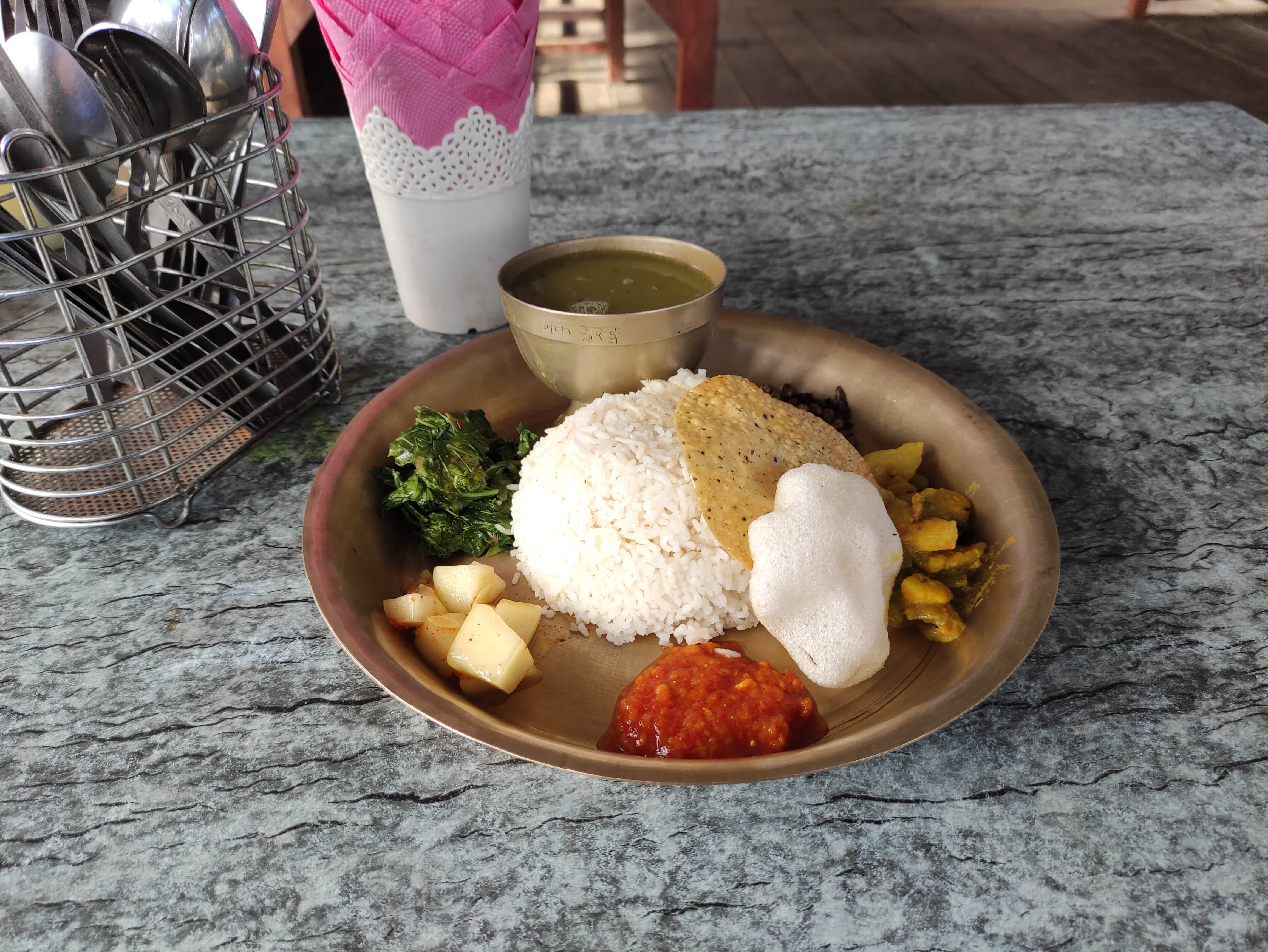
The food at all guesthouses in the Annapurna conservation area is the same. The standard option is Dal Bhat, i.e. lentil stew over rice and usually served with some sides like curried greens and potatoes plus pickles. At the lower camps, a plate cost around 350 rupees though it gets progressively more expensive (around 550) at the higher camps. This is definitely the best deal as it includes unlimited refills but it can get boring quite quickly. The other options were fried rice or noodles (chow mein) as well as some western options to placate the picky eaters, like chips and spaghetti. Regardless of the main, I highly recommend the lemon tea to wash it down!
Most people start hiking bright and early in Nepal and so I did too, waking up after a surprisingly good night of sleep at about 5 and then setting off shortly before 7. The aim for this day was to make it to the high camp, which is situated at about 4200m and within sight of the final base camp. This day was by far the most scenic as the mountains were in-sight for virtually the entire time and the forests contained many hidden delights like small groves covered with Tibetan prayer flags and shrines with bells which you could ring and hear echo through the valley. I made record time (“Nepali time” as the guides say) and was at high camp at around 10:30. Instead of continuing to the base camp, I decided to just relax in the high camp and soak in the views.
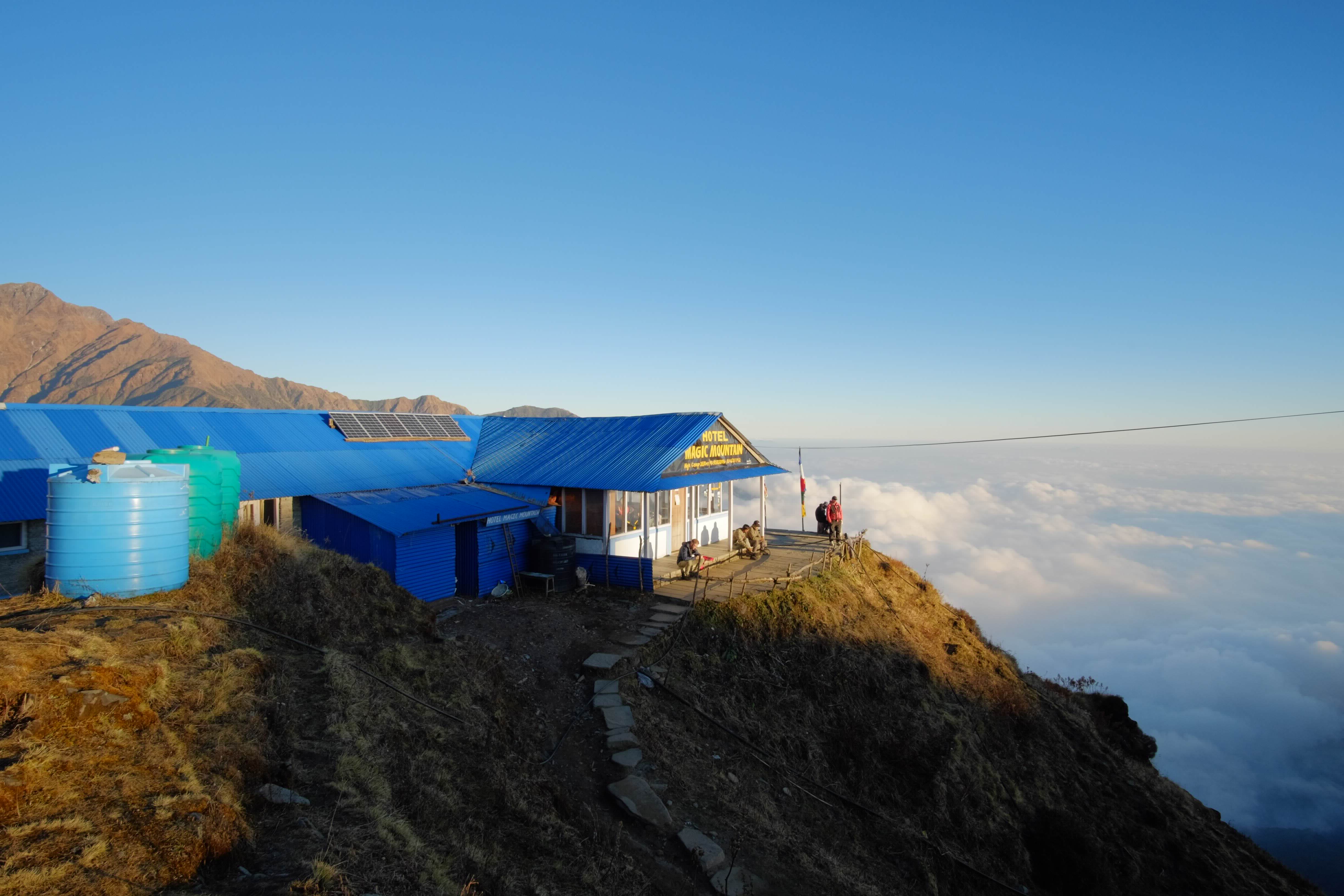
The guesthouse I chose was towards the far end of the camp but had by far the most dramatic views. On one side was a sheer drop into Pokhara valley, though this was covered by clouds for almost all of the day. From my bedroom window, I had a great view of Annapurna, which looked so picturesque it almost seemed fake. Stepping outside of the room onto the patio, one could see Machapuchare towering above and from close distance.
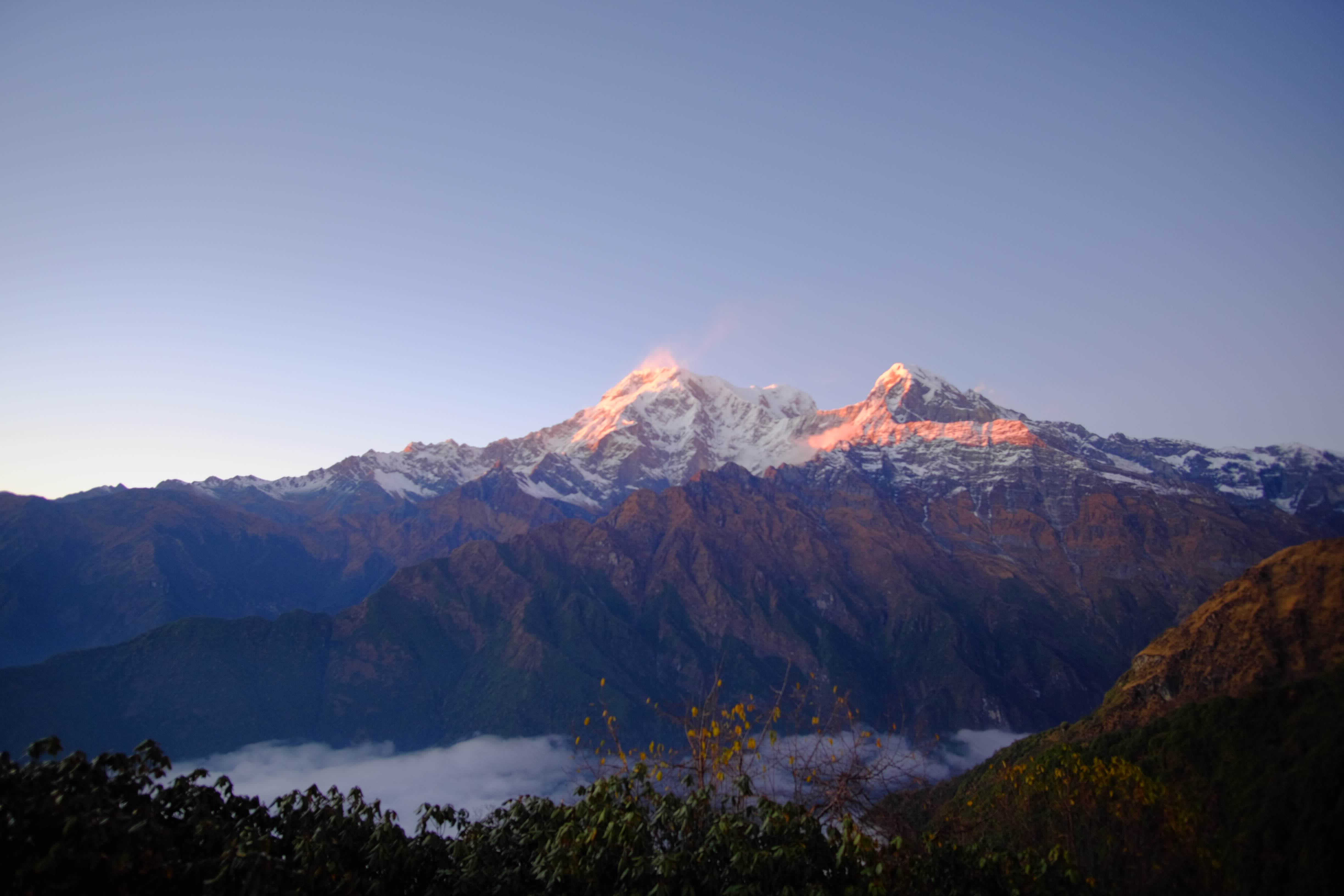
High camp has no electricity, so after sunset, the backup battery provides some lighting in the restaurant, but that’s about it. So it’s a good time to chat with fellow guests (High camp was popular in mid-November when I went) until it gets too cold. However, many trekkers leave before sunrise to climb the final ascent up to base camp, so the evenings aren’t all that lively.
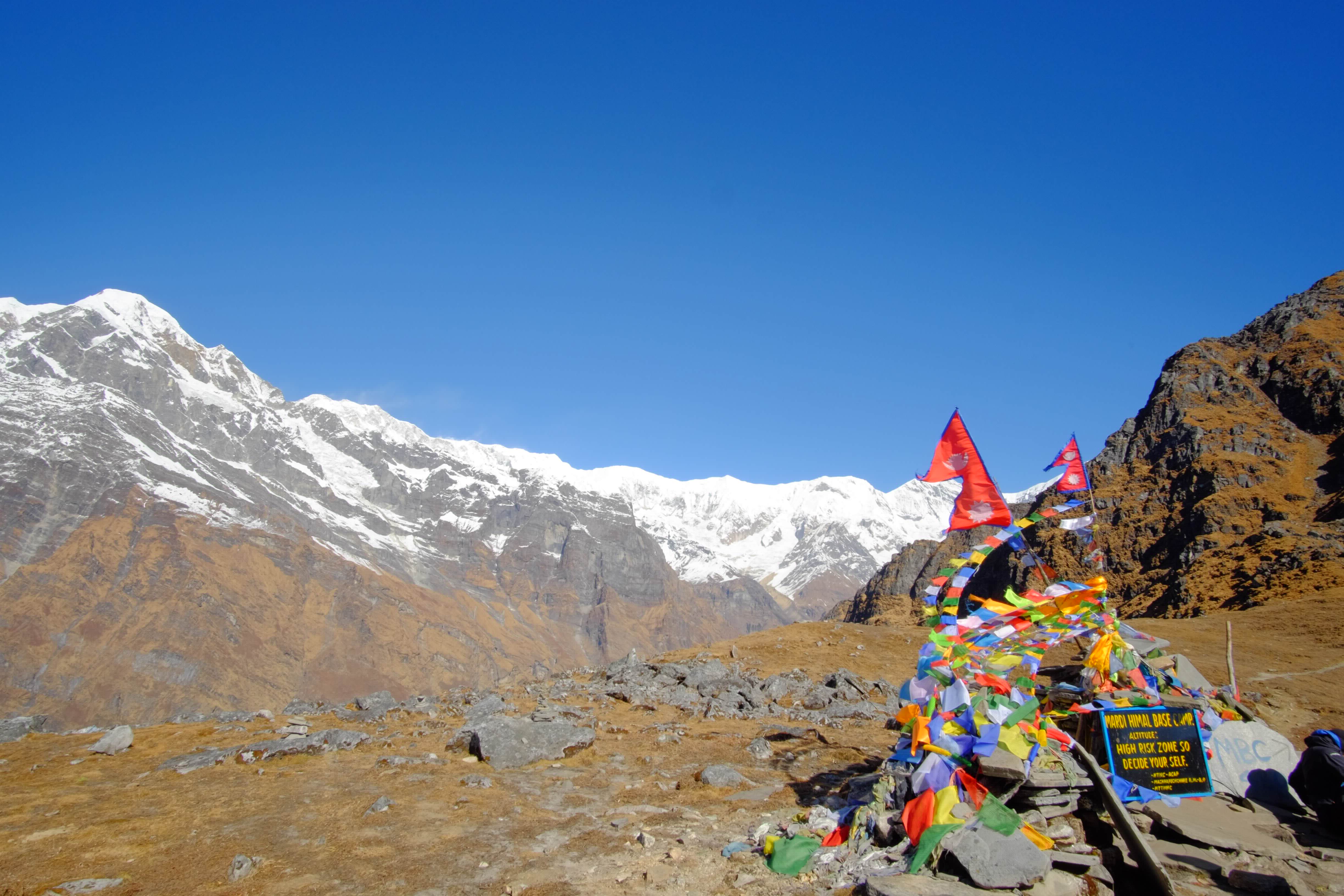
The final ascent to base camp was by far the most sketchy part of the trek and also the most athletically challenging. Although you could actually see the base camp from the high camp, it required walking along a narrow track that traversed a ridgetop, with sheer drops on either side. At points, one would need to scramble up boulders on all fours. This was compounded by the effects of the altitude, which was already around 4300m, so frequent breaks were needed to avoid getting light-headed. Nevertheless, it didn’t take too long to get to the top (perhaps a couple of hours) and being at the summit felt immensely rewarding, both from a personal level of achievement as well as the satisfaction from the immense views.
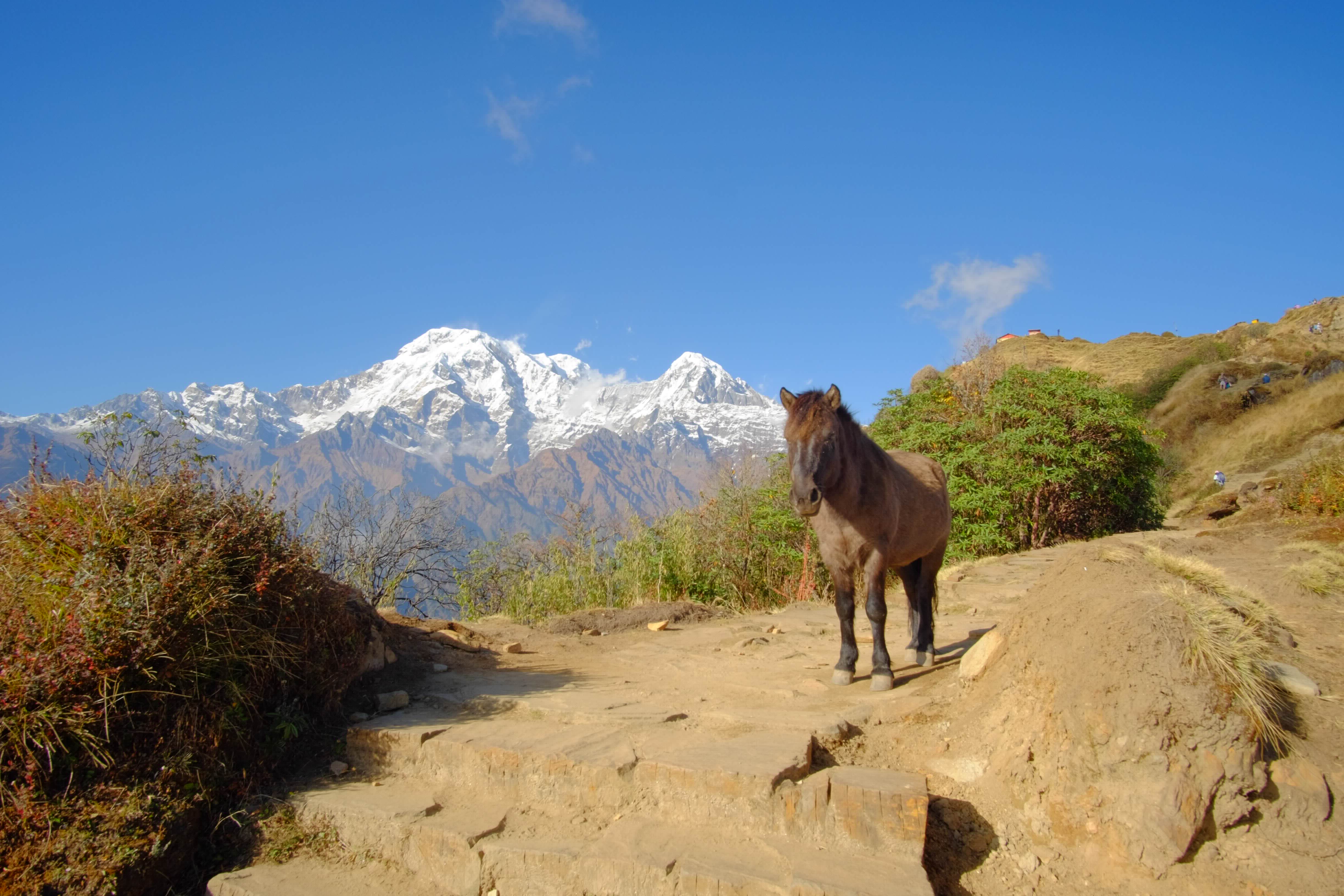
It was about mid-day by the time I got back to high camp and I decided to make my way back down to civilisation. The descent was surprisingly novel as I had been so distracted by the views of the Annapurna range for the entire climb, that I completely forgot to soak in the other views around! One memorable moment was right after high-camp, where I could see nothing but the dirt track in front of me and everything else was hidden by thick white clouds, as if one was literally on the stairway to heaven.
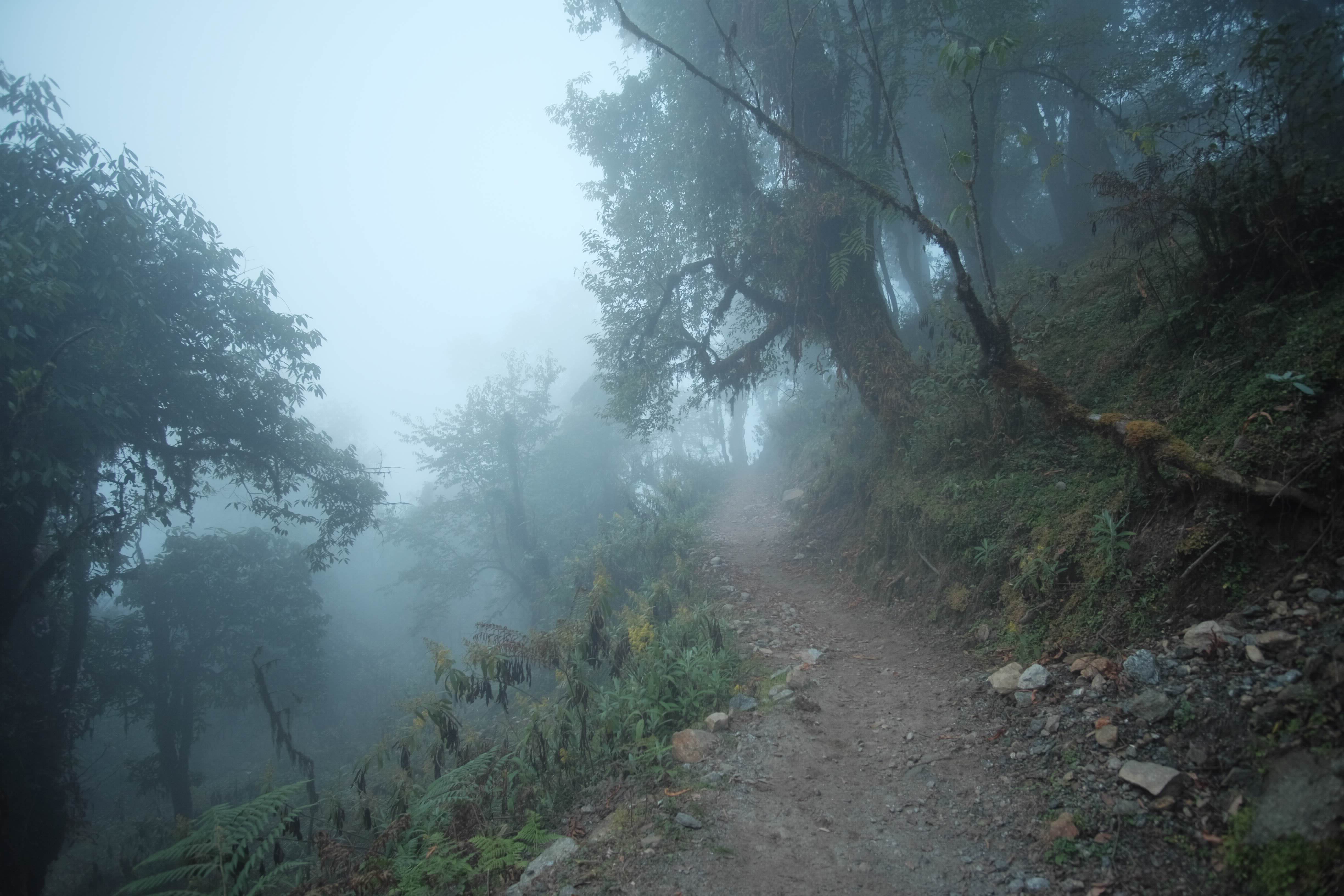
Down in the hills, the plan was to descend via a side-path to the small village of Sidhing and take a Jeep back to Pokhara. The path starts at low camp and hence avoids having to repeat the entire rest of the track again. One disadvantage though turned out to be the 4+ hours of downwards stair climbing I needed to make, which was a killer on my calves and by the end I was walking like a pirate. It was also eerily quiet on this part of the trek and the gloomy environment of the forest didn’t make me feel any safer! I heard frequent rustling in the trees beyond my view, which was quite unsettling. Luckily, these turned out mostly to be water buffalo and other animals grazing–not Bengal tigers.
All in all, Mardi Himal didn’t disappoint as my first foray into trekking in Nepal. It was easy to get to in comparison to the treks out in the Everest region (they require a flight to the world’s most dangerous airport: Lukla) or Langtang and although not as scenic as the Annapurna circuit, it still had fantastic views for most of the journey and I forwent showering for a much shorter duration than I would have on that trek! Perhaps I’ll come back and do a more “serious” one, I’m certainly tempted.