The Ganges
posted on 23 November, 2025 by Dan Vonk in travel, personal
Varanasi is one of the world’s oldest continuously inhabited cities and frankly it shows in some less than ideal ways: the oldest parts of the city consist of dense housing and narrow labyrinthine alleyways. Now that’s not a problem necessarily, as Venice and many cities in Spain are also built in the same way. However, Varanasi takes city life to a new level. The alleyways are also home to local cows, which while holy, do tend to make a huge mess on the pavement and hog up the streets, making it difficult to get to where you’re going. Other animals are also present, wandering the streets, like goats. The animal husbandry, combined with the open drainage channels down the streets, gives the place a very “charming” medieval feel, but it’s not for the faint of heart.
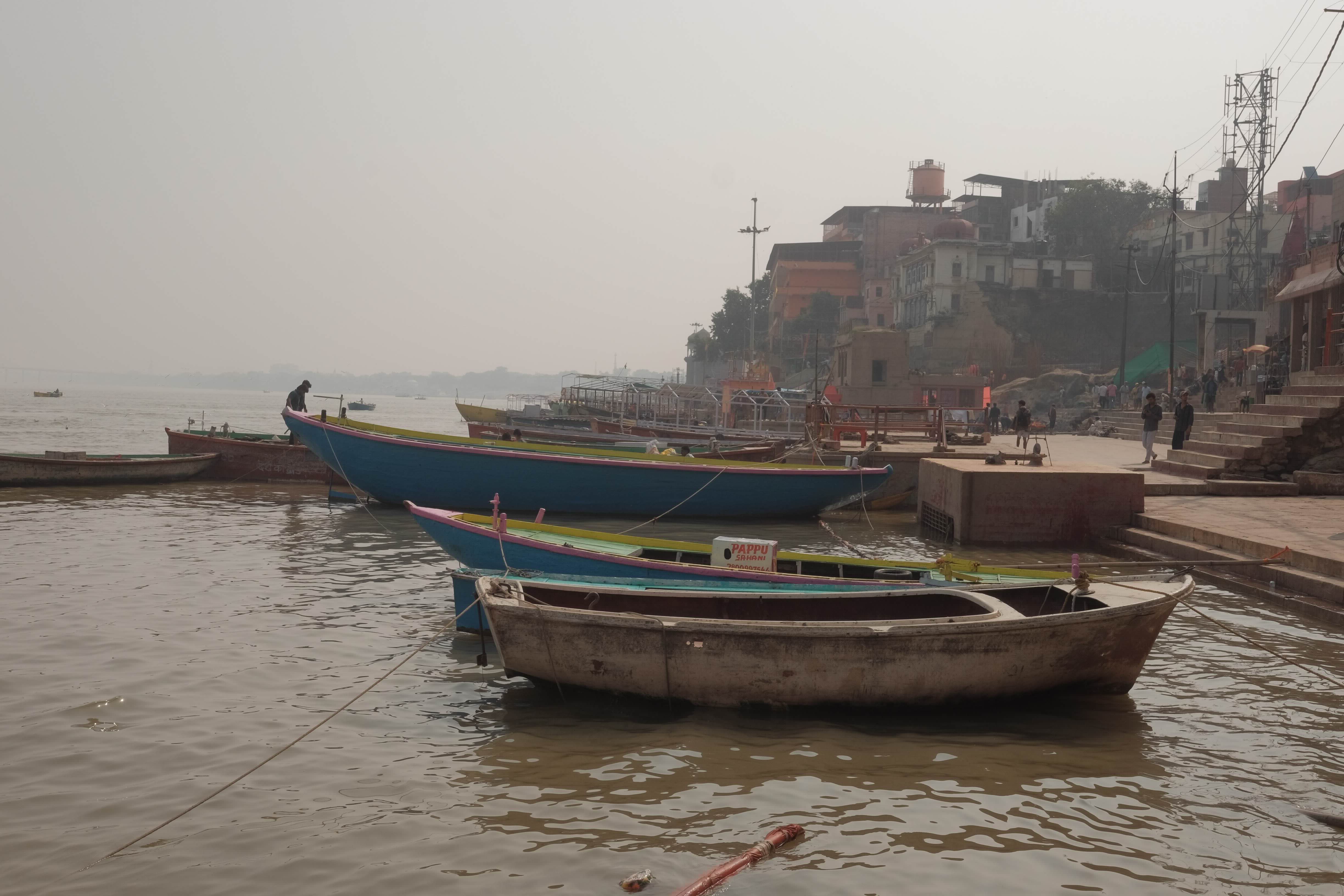
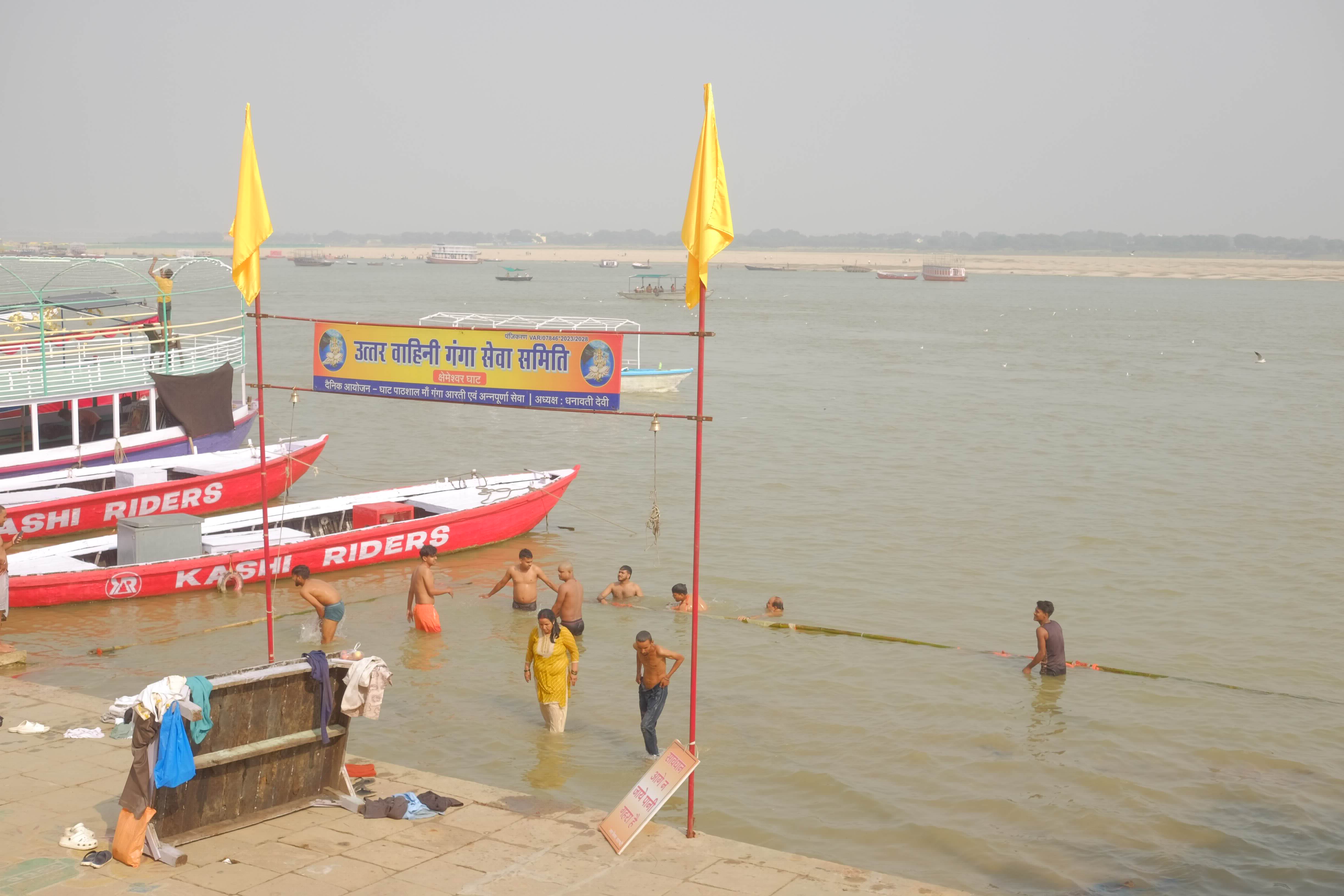
Of course, rather than the city itself, the main attraction to Varanasi is the Ganges river, which is considered the holiest of all rivers in the Hindu faith; it originally being a river Goddess residing in heaven but was brought down safely to Earth by Shiva. Due to this sacred origin, the river has purifying qualities, which wash not merely the body but also the soul. It does this by loosening the karmic bonds and removing accumulated impurity, which leaves the person well-prepared for further spiritual progress. As such, going for a little bath in the river is a highly popular activity in India and even I was told by people on the way there that I must do it. I wasn’t really entertaining the idea, but when I actually arrived on the river bank (the ghats) and saw the deep brown tint of the water, even putting a foot in seemed mad. This doesn’t stop Hindu pilgrims from doing it though, but perhaps they are more acclimated to the local bacteria than I am.
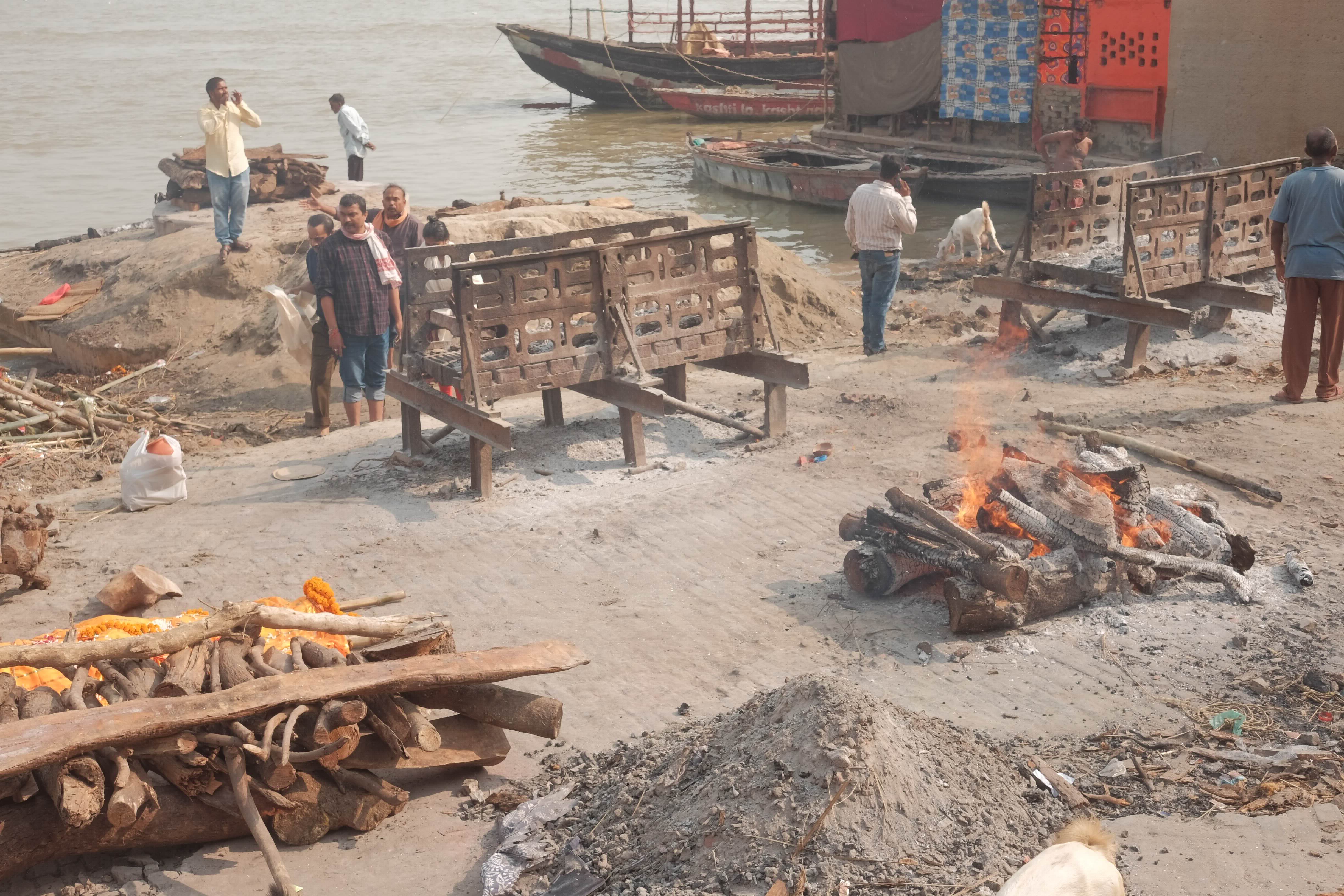
The Ganges isn’t just important for a purified life–it’s also highly significant at death. According to Hindu belief, dying near the Ganges and being cremated on the banks grants the soul direct access to liberation (moksha), that is ending the endless cycle of reincarnation (samsara). They do this cremation on wooden pyres right on the banks, where the public can see the bodies burn out in the open. The logs and a veil cover most of the body itself, but sometimes one can see the feet and head stick out of the sides of the pyre, which is a fairly gruesome sight. Once the body is cremated, they send the remains into the river, completing the soul’s journey and ending the need for the soul to take another body.